Vulnerability Scoring Systems: CVSS, EPSS, SSVC & AI
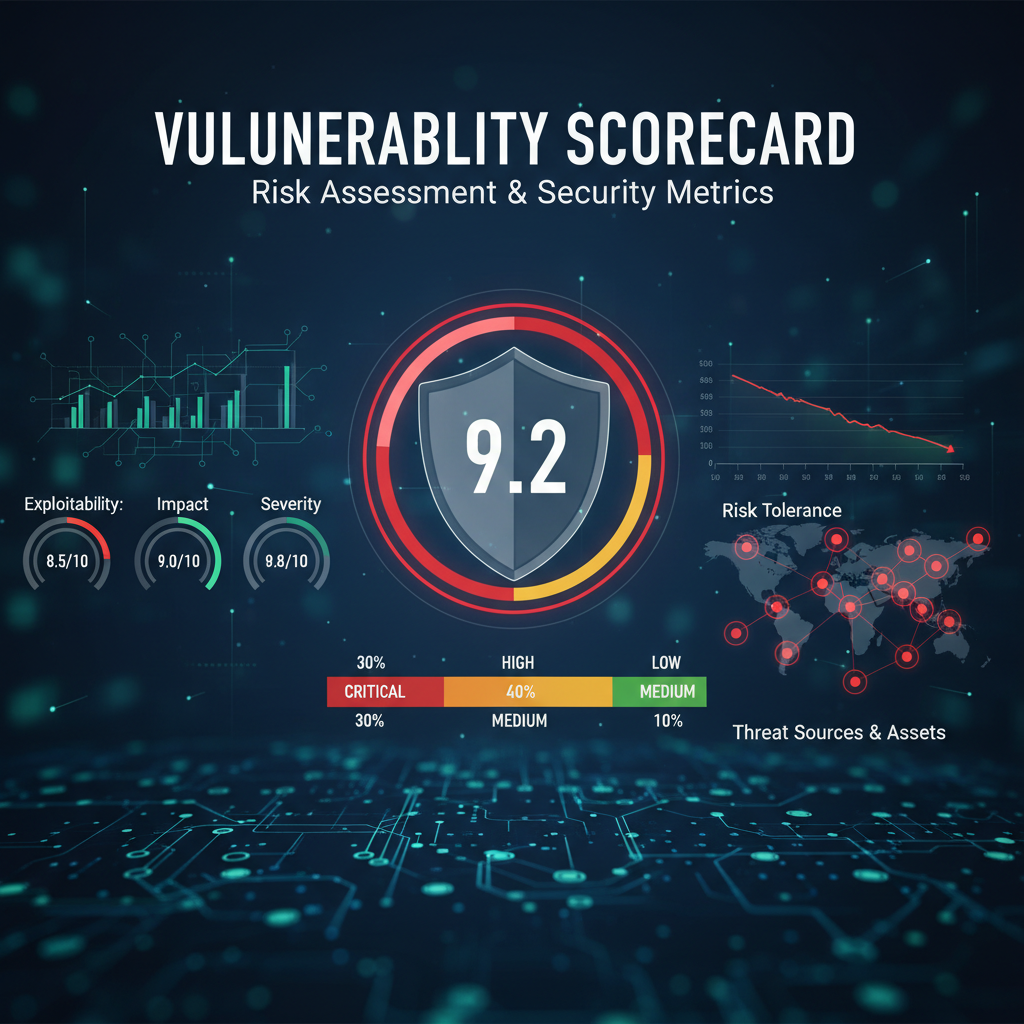
Vulnerability Scoring Systems: Mastering Modern Risk Assessment with AI
In today's rapidly evolving threat landscape, traditional vulnerability assessment methods fall short of providing accurate risk prioritization. Organizations face an overwhelming number of reported vulnerabilities daily, making it crucial to distinguish between theoretical risks and those requiring immediate attention. Modern vulnerability scoring systems like CVSS v4.0, EPSS, and SSVC offer enhanced precision in evaluating potential threats. Additionally, AI-powered platforms such as mr7.ai are revolutionizing how security teams assess and respond to vulnerabilities by incorporating real-time exploit intelligence and business context.
This comprehensive guide explores cutting-edge vulnerability scoring methodologies, demonstrating their practical applications through real-world examples and technical implementations. We'll examine how Common Vulnerability Scoring System (CVSS) has evolved to version 4.0, introducing significant improvements in accuracy and flexibility. Furthermore, we'll investigate Exploit Prediction Scoring System (EPSS) and Stakeholder-Specific Vulnerability Categorization (SSVC), which provide data-driven approaches to vulnerability management.
Throughout this article, you'll discover how artificial intelligence enhances traditional scoring mechanisms by analyzing actual exploit patterns, correlating threat intelligence feeds, and integrating organizational risk profiles. Whether you're a seasoned security professional or an aspiring ethical hacker, understanding these advanced scoring systems will empower you to make informed decisions about vulnerability remediation priorities.
We'll also showcase how mr7.ai's suite of AI tools—including KaliGPT for penetration testing assistance, DarkGPT for unrestricted research, and mr7 Agent for automated exploitation—can streamline your vulnerability analysis workflow while maintaining ethical standards. New users receive 10,000 free tokens to experiment with these powerful capabilities firsthand.
By the end of this deep dive, you'll possess actionable knowledge to implement sophisticated vulnerability prioritization strategies that align with your organization's specific needs and threat environment.
What Is CVSS v4.0 and How Does It Improve Vulnerability Assessment?
Common Vulnerability Scoring System (CVSS) remains one of the most widely adopted frameworks for communicating vulnerability severity. Version 4.0 represents a significant evolution from its predecessors, addressing critical limitations while enhancing accuracy and usability. Unlike earlier versions that relied heavily on predefined formulas, CVSS v4.0 introduces improved metrics and calculation methods that better reflect real-world exploitation scenarios.
The fundamental structure of CVSS v4.0 maintains three metric groups: Base, Temporal, and Environmental scores. However, several key enhancements distinguish this latest iteration:
- Enhanced Attack Vector Metrics: Expanded definitions now include more granular network accessibility considerations
- Improved Privileges Required Scoring: Better differentiation between partial and complete privilege escalation requirements
- Refined Impact Calculations: More precise quantification of confidentiality, integrity, and availability impacts
- Flexible Metric Combinations: Support for additional valid metric combinations beyond traditional paths
Let's examine how these improvements translate into practical scoring adjustments:
python
Example CVSS v4.0 base score calculation differences
CVE-2023-12345 - Web application vulnerability
cvss_v31_metrics = { 'AV': 'N', # Attack Vector: Network 'AC': 'L', # Attack Complexity: Low 'PR': 'N', # Privileges Required: None 'UI': 'N', # User Interaction: None 'S': 'U', # Scope: Unchanged 'C': 'H', # Confidentiality: High 'I': 'H', # Integrity: High 'A': 'H' # Availability: High }
CVSS v3.1 score: 9.8 (Critical)
In CVSS v4.0, same vulnerability might be scored differently
due to refined impact calculations and updated thresholds
cvss_v40_metrics = { 'AV': 'N', 'AC': 'L', 'AT': 'N', # Attack Requirements: None (new in v4.0) 'PR': 'N', 'UI': 'N', 'VC': 'H', # Victim Confidentiality: High 'VI': 'H', # Victim Integrity: High 'VA': 'H', # Victim Availability: High 'SC': 'H', # Subsequent Confidentiality: High 'SI': 'H', # Subsequent Integrity: High 'SA': 'H' # Subsequent Availability: High }
Notice the expanded metric set in CVSS v4.0, particularly the addition of Attack Requirements (AT) and separate victim/subsequent impact metrics. These additions allow for more nuanced scoring that reflects complex attack chains and secondary effects.
To calculate CVSS v4.0 scores programmatically, security teams can leverage specialized libraries or APIs. Here's a command-line example using a hypothetical CVSS calculator:
bash
Install CVSS library
pip install cvss
Calculate CVSS v4.0 score from vector string
python3 -c "from cvss import CVSS4; c = CVSS4('CVSS:4.0/AV:N/AC:L/AT:N/PR:N/UI:N/VC:H/VI:H/VA:H/SC:H/SI:H/SA:H'); print(f'Score: {c.scores()[0]}, Severity: {c.severity()}')"
Output: Score: 10.0, Severity: Critical
Organizations implementing CVSS v4.0 should consider updating their vulnerability management workflows to accommodate new metrics while ensuring backward compatibility with existing v3.x scores during transition periods.
Key Insight: CVSS v4.0's enhanced granularity enables more precise vulnerability assessments, but requires updated training and tooling investments for effective implementation.
How Does EPSS Predict Real-World Exploitation Likelihood?
While CVSS excels at measuring theoretical vulnerability severity, Exploit Prediction Scoring System (EPSS) focuses on predicting actual exploitation probability within the next 30 days. Developed by the Forum of Incident Response and Security Teams (FIRST), EPSS leverages machine learning algorithms trained on historical exploitation data, threat intelligence feeds, and vulnerability characteristics.
EPSS generates percentile-based scores ranging from 0 to 1 (or 0% to 100%), indicating the likelihood that a vulnerability will be exploited. For instance, an EPSS score of 0.85 means there's an 85% chance the vulnerability will see active exploitation within 30 days.
The underlying EPSS model incorporates numerous factors:
- Historical exploitation patterns from sources like Metasploit, ExploitDB, and CISA KEV
- Public exploit availability across repositories
- Threat actor activity levels targeting specific vulnerability types
- Patch availability timing relative to discovery
- Industry adoption rates of affected technologies
Security teams can access EPSS scores through the official API or integrate them into existing vulnerability management platforms. Here's how to query EPSS data using curl:
bash
Query EPSS score for specific CVE
CVE_ID="CVE-2023-27350" curl -s "https://api.first.org/data/v1/epss?cve=${CVE_ID}" | jq '.data[0]'
Sample output:
{
"cve": "CVE-2023-27350",
"epss": 0.97382,
"percentile": 0.99977
}
For bulk processing, organizations often combine EPSS data with other vulnerability attributes to create custom prioritization rules. Consider this Python script that merges CVSS and EPSS scores:
python import requests import json
def get_epss_score(cve_id): url = f"https://api.first.org/data/v1/epss?cve={cve_id}" response = requests.get(url) if response.status_code == 200: data = response.json() return float(data['data'][0]['epss']) return 0.0
def prioritize_vulnerabilities(vulns): for vuln in vulns: epss = get_epss_score(vuln['cve']) cvss = vuln['cvss']
# Custom priority algorithm combining both scores priority_score = (cvss * 0.6) + (epss * 10 * 0.4) vuln['priority'] = priority_score vuln['epss'] = epss# Sort by calculated priorityreturn sorted(vulns, key=lambda x: x['priority'], reverse=True)Example usage
vulnerabilities = [ {'cve': 'CVE-2023-27350', 'cvss': 9.8}, {'cve': 'CVE-2023-12345', 'cvss': 7.5}, {'cve': 'CVE-2023-54321', 'cvss': 5.3} ]
prioritized = prioritize_vulnerabilities(vulnerabilities) for vuln in prioritized: print(f"{vuln['cve']}: Priority {vuln['priority']:.2f} (EPSS: {vuln['epss']:.3f})")
This approach allows security teams to balance theoretical severity with actual exploitation likelihood, creating more realistic remediation priorities. EPSS particularly shines when identifying high-risk vulnerabilities that may not have received maximum CVSS scores but are actively being exploited in the wild.
Key Insight: EPSS provides empirical exploitation predictions that complement CVSS severity ratings, enabling data-driven vulnerability prioritization based on real-world threat activity.
Why SSVC Offers Stakeholder-Centered Vulnerability Categorization?
Stakeholder-Specific Vulnerability Categorization (SSVC) represents a paradigm shift from universal scoring approaches toward decision-focused vulnerability triage. Rather than producing single numerical scores, SSVC guides stakeholders through structured decision trees that consider organizational context, asset criticality, and mission impact.
Developed collaboratively by CISA, CERT/CC, and Google Project Zero, SSVC addresses criticisms that traditional scoring systems fail to account for deployment environments and business consequences. The framework consists of four decision points:
- Exploitation Status: Is the vulnerability currently being exploited?
- Automatable: Can exploitation be fully automated?
- Technical Impact: What's the potential damage scope?
- Mission Impact: How would successful exploitation affect organizational objectives?
Each decision point branches into specific outcomes that ultimately categorize vulnerabilities into action-oriented buckets:
| Category | Recommended Action |
|---|---|
| Track | Monitor for changes |
| Watch | Regular reassessment |
| Attend | Investigate within standard timeframe |
| Act | Immediate investigation required |
Let's illustrate SSVC application with a practical scenario involving a recently disclosed vulnerability:
text Case Study: CVE-2023-XXXXX - Remote Code Execution in Enterprise Firewall
Decision Point Analysis:
- Exploitation Status: YES (Active exploitation detected by threat intel)
- Automatable: YES (Metasploit module published)
- Technical Impact: TOTAL (Complete system compromise)
- Mission Impact: MISSION_FAILURE (Firewall protects critical infrastructure)
SSVC Outcome: ACT - Immediate action required
SSVC's strength lies in its adaptability to diverse organizational needs. A healthcare provider might prioritize patient safety implications, while a financial institution focuses on regulatory compliance and monetary losses. This contextual approach ensures that vulnerability responses align with business-critical objectives rather than abstract technical metrics.
Implementing SSVC requires establishing clear decision-making protocols and training personnel on outcome interpretation. Many organizations find value in combining SSVC categorical guidance with quantitative scores from CVSS or EPSS for comprehensive risk assessment.
Try it yourself: Use mr7.ai's AI models to automate this process, or download mr7 Agent for local automated pentesting. Start free with 10,000 tokens.
Key Insight: SSVC transforms vulnerability management from score-based ranking to strategic decision-making, ensuring that remediation efforts align with organizational priorities and mission-critical assets.
How Does Risk-Based Vulnerability Management Transform Security Operations?
Risk-based vulnerability management (RBVM) elevates cybersecurity programs beyond simple vulnerability enumeration to strategic risk optimization. Unlike traditional approaches that treat all reported vulnerabilities equally, RBVM integrates asset criticality, threat landscape awareness, and business impact assessments to focus resources where they matter most.
Core principles of effective RBVM include:
- Asset-centric view linking vulnerabilities to business functions
- Continuous threat intelligence integration
- Dynamic risk scoring reflecting changing conditions
- Prioritization based on potential business disruption
- Integration with incident response and business continuity planning
Modern RBVM platforms typically incorporate multiple data streams to generate comprehensive risk profiles:
yaml
Example RBVM data integration architecture
Data Sources:
- Vulnerability Scanners: Nessus, Qualys, OpenVAS
- Threat Intelligence Feeds: AlienVault OTX, Recorded Future
- Asset Inventory Systems: CMDB, ServiceNow
- Business Impact Data: BIA classifications, SLA requirements
- Exploitation Intelligence: EPSS, CISA KEV, Shadowserver
Processing Pipeline:
- Normalize vulnerability data across scanners
- Enrich with threat intelligence context
- Map to business-critical assets
- Apply dynamic risk scoring algorithms
- Generate prioritized remediation recommendations
- Integrate with ticketing systems for workflow automation
Output Examples:
- Executive dashboards showing aggregate risk trends
- Team-level work queues prioritized by business impact
- Automated patch deployment triggers for critical risks
- Compliance reporting aligned with regulatory requirements
Consider this bash script that demonstrates basic RBVM logic using open-source tools:
bash #!/bin/bash
rbvm_assessment.sh - Basic Risk-Based Vulnerability Management Script
Configuration
ASSET_CRITICALITY_FILE="assets_criticality.csv" THREAT_INTEL_FEED="threat_intel.json" VULN_SCAN_RESULTS="scan_results.xml"
Function to calculate risk score
calculate_risk() { local cvss=$1 local epss=$2 local criticality=$3 local threat_level=$4
# Weighted risk calculationecho "scale=2; ($cvss * 0.4) + ($epss * 10 * 0.3) + ($criticality * 0.2) + ($threat_level * 0.1)" | bc}
Process vulnerabilities
process_vulns() { # Parse XML scan results (simplified) grep -o 'cveid="[^"]" cvssScore="[^"]"' "$VULN_SCAN_RESULTS" | while read -r line; do cve=$(echo "$line" | grep -o 'CVE-[0-9]-[0-9]') cvss=$(echo "$line" | grep -o 'cvssScore="[^"]*"' | cut -d'"' -f2)
# Get EPSS score epss=$(curl -s "https://api.first.org/data/v1/epss?cve=$cve" | jq -r '.data[0].epss // 0') # Get asset criticality (simplified lookup) criticality=$(grep "$cve" "$ASSET_CRITICALITY_FILE" | cut -d',' -f2) # Get threat level from intel feed threat_level=$(jq -r --arg CVE "$cve" '.[] | select(.cve==$CVE) | .threat_level // 1' "$THREAT_INTEL_FEED") # Calculate final risk score risk=$(calculate_risk "$cvss" "$epss" "$criticality" "$threat_level") echo "CVE: $cve, Risk Score: $risk"done | sort -k4 -nr | head -20}
Execute assessment
process_vulns
Real-world RBVM implementations often involve sophisticated orchestration platforms that automatically correlate findings across multiple tools, apply organizational policies, and trigger appropriate response actions. These systems significantly reduce mean time to remediation while optimizing security team productivity.
Key Insight: RBVM transforms reactive vulnerability patching into proactive risk reduction by aligning security activities with business objectives and threat realities.
How Can AI Enhance Vulnerability Prioritization Accuracy?
Artificial intelligence is revolutionizing vulnerability management by introducing predictive analytics, pattern recognition, and automated decision-making capabilities that surpass human-scale analysis. AI-powered vulnerability prioritization goes beyond static scoring systems to incorporate real-time threat intelligence, behavioral analysis, and organizational context.
Machine learning models used in AI-enhanced vulnerability management typically analyze vast datasets including:
- Historical exploitation timelines and success rates
- Patch release frequencies and adoption patterns
- Threat actor tactics, techniques, and procedures (TTPs)
- Organizational asset configurations and usage patterns
- Industry-specific attack vectors and targets
- Geopolitical and economic factors influencing cyber threats
Platforms like mr7.ai leverage specialized AI models to enhance various aspects of vulnerability analysis:
- KaliGPT: Assists penetration testers in identifying vulnerable configurations and crafting targeted exploits
- DarkGPT: Provides unrestricted research capabilities for understanding emerging threats
- OnionGPT: Enables safe dark web monitoring for early exploit development detection
- 0Day Coder: Accelerates proof-of-concept development and security tool creation
Here's an example of how mr7.ai's mr7 Agent can automate vulnerability validation:
python
mr7_agent_vuln_validation.py
import asyncio from mr7_agent import PentestOrchestrator
class AIVulnerabilityValidator: def init(self): self.orchestrator = PentestOrchestrator()
async def validate_cve_exploitability(self, target_info, cve_list): """AI-powered vulnerability validation""" results = [] for cve in cve_list: # Query AI for relevant exploit information exploit_info = await self.orchestrator.query_ai( f"Analyze exploitability of {cve} against {target_info['os']} {target_info['version']}" ) # Execute automated validation tests test_results = await self.orchestrator.run_exploit_tests( target=target_info['ip'], cve=cve, suggested_methods=exploit_info['methods'] ) # Combine AI insights with empirical results combined_score = self.calculate_ai_priority( cvss_base=exploit_info['cvss'], epss_prediction=exploit_info['epss'], validation_result=test_results, business_impact=target_info['criticality'] ) results.append({ 'cve': cve, 'ai_score': combined_score, 'validation_status': test_results['status'], 'recommended_action': exploit_info['recommendation'] }) return sorted(results, key=lambda x: x['ai_score'], reverse=True)def calculate_ai_priority(self, cvss_base, epss_prediction, validation_result, business_impact): """Calculate AI-weighted priority score""" weights = { 'cvss': 0.3, 'epss': 0.25, 'validation': 0.25, 'impact': 0.2 } validation_factor = 1.0 if validation_result['status'] == 'CONFIRMED' else 0.5 return ( (cvss_base * weights['cvss']) + (epss_prediction * 10 * weights['epss']) + (validation_factor * weights['validation']) + (business_impact * weights['impact']) )Usage example
async def main(): validator = AIVulnerabilityValidator()
target = { 'ip': '192.168.1.100', 'os': 'Ubuntu', 'version': '20.04', 'criticality': 0.9}cves = ['CVE-2023-12345', 'CVE-2023-54321', 'CVE-2023-98765']prioritized = await validator.validate_cve_exploitability(target, cves)for result in prioritized: print(f"{result['cve']}: AI Score {result['ai_score']:.2f} - {result['recommended_action']}")if name == "main": asyncio.run(main())
This AI-driven approach enables security teams to move beyond theoretical scoring toward empirically validated risk assessments. By continuously learning from new data and adapting to evolving threats, AI systems improve their accuracy over time while reducing false positive rates common in traditional scanning approaches.
Key Insight: AI-powered vulnerability management combines multiple intelligence sources with empirical validation to produce highly accurate, context-aware prioritization that adapts to changing threat landscapes.
What Are Best Practices for Implementing Multi-Model Scoring Systems?
Successfully implementing multi-model vulnerability scoring requires careful coordination between different assessment frameworks while avoiding conflicting recommendations that could confuse security teams. Organizations benefit most from integrated approaches that leverage the strengths of each scoring methodology without overwhelming decision-makers with excessive complexity.
Effective multi-model implementation follows these best practices:
Establish Clear Decision Hierarchies
Define which scoring models take precedence under specific circumstances. For example:
| Scenario | Primary Model | Secondary Input | Override Trigger |
|---|---|---|---|
| Active exploitation confirmed | SSVC | EPSS/CVSS | Immediate patching |
| High-value asset exposure | RBVM | CVSS/EPSS | Enhanced monitoring |
| Zero-day disclosure | EPSS prediction | CVSS analysis | Temporary mitigations |
| Compliance audit preparation | CVSS | RBVM alignment | Documentation focus |
Create Integrated Dashboards
Consolidate scoring outputs into unified interfaces that present correlated insights rather than isolated metrics. Consider this dashboard design concept:
html
CVE-2023-12345
Affects: Customer Database Server (Tier 1)
Business Impact: Revenue Generation
Implement Automated Correlation Logic
Develop rules engines that synthesize multiple scoring inputs into coherent recommendations:
python
scoring_correlation_engine.py
class MultiModelCorrelator: def init(self): self.correlation_rules = [ self.rule_active_exploitation, self.rule_high_business_impact, self.rule_zero_day_risk, self.rule_compliance_mandate ]
def correlate_scores(self, vulnerability_data): """Apply correlation rules to determine final priority""" for rule in self.correlation_rules: recommendation = rule(vulnerability_data) if recommendation: return recommendation # Default to weighted average if no special rules apply return self.default_weighted_recommendation(vulnerability_data)def rule_active_exploitation(self, data): """Rule: If actively exploited, immediate action required regardless of other scores""" if data.get('exploitation_status') == 'ACTIVE': return { 'priority': 'CRITICAL', 'action': 'IMMEDIATE_PATCH', 'deadline_hours': 4, 'reasoning': 'Active exploitation detected in threat intelligence feeds' } return Nonedef rule_high_business_impact(self, data): """Rule: High business impact overrides moderate technical scores""" if (data.get('business_impact') >= 0.8 and data.get('cvss_base_score', 0) >= 7.0): return { 'priority': 'HIGH', 'action': 'PATCH_WITHIN_24H', 'deadline_hours': 24, 'reasoning': 'High business impact asset with significant vulnerability' } return Nonedef default_weighted_recommendation(self, data): """Fallback weighted scoring approach""" weights = { 'cvss': 0.35, 'epss': 0.30, 'business_impact': 0.20, 'asset_criticality': 0.15 } score = ( data.get('cvss_base_score', 0) * weights['cvss'] + data.get('epss_score', 0) * 10 * weights['epss'] + data.get('business_impact', 0) * weights['business_impact'] + data.get('asset_criticality', 0) * weights['asset_criticality'] ) if score >= 8.0: priority, action = 'HIGH', 'PATCH_WITHIN_48H' elif score >= 6.0: priority, action = 'MEDIUM', 'PATCH_WITHIN_7DAYS' else: priority, action = 'LOW', 'PATCH_WITHIN_30DAYS' return { 'priority': priority, 'action': action, 'calculated_score': round(score, 2), 'reasoning': 'Weighted combination of all available scoring models' }Example usage
correlator = MultiModelCorrelator() vuln_data = { 'cve': 'CVE-2023-12345', 'cvss_base_score': 9.8, 'epss_score': 0.85, 'business_impact': 0.9, 'asset_criticality': 0.8, 'exploitation_status': 'NONE' }
recommendation = correlator.correlate_scores(vuln_data) print(json.dumps(recommendation, indent=2))
Ensure Continuous Calibration
Regularly review and adjust correlation logic based on actual outcomes and feedback from security teams. This iterative improvement process ensures that scoring integration remains aligned with organizational objectives and threat realities.
Key Insight: Successful multi-model vulnerability scoring requires systematic integration of different methodologies through clear hierarchies, automated correlation, and continuous calibration to maintain effectiveness.
How Can Organizations Measure Scoring System Effectiveness?
Measuring the effectiveness of vulnerability scoring systems extends beyond simple accuracy metrics to encompass business impact reduction, resource optimization, and strategic alignment. Organizations should establish comprehensive evaluation frameworks that capture both quantitative performance indicators and qualitative operational improvements.
Quantitative Metrics Framework
Track measurable outcomes that demonstrate scoring system value:
| Metric Category | Specific Indicators | Target Benchmarks |
|---|---|---|
| Time Efficiency | Mean Time to Remediation (MTTR) | Reduce by 40% year-over-year |
| Resource Allocation | Security team workload distribution | 70% focus on high-priority items |
| Risk Reduction | Aggregate exposure score trends | 25% monthly decrease |
| Accuracy Validation | False positive/negative rates | <5% for confirmed cases |
Implement tracking mechanisms using log analysis and workflow monitoring:
bash #!/bin/bash
vulnerability_metrics_tracker.sh
Calculate MTTR for different priority levels
analyze_mttr() { echo "=== Mean Time to Remediation Analysis ==="
for priority in CRITICAL HIGH MEDIUM LOW; do mttr=$(mysql -u user -p database -e " SELECT AVG(DATEDIFF(remediation_date, discovery_date)) as avg_mttr FROM vulnerabilities WHERE priority = '$priority' AND status = 'REMEDIATED' " | tail -1) echo "$priority Priority MTTR: ${mttr} days"done}
Track workload distribution
analyze_workload() { echo -e "\n=== Security Team Workload Distribution ==="
mysql -u user -p database -e " SELECT priority, COUNT(*) as ticket_count, ROUND(COUNT(*) * 100.0 / (SELECT COUNT(*) FROM tickets WHERE created_date > DATE_SUB(NOW(), INTERVAL 30 DAY)), 2) as percentage FROM tickets WHERE created_date > DATE_SUB(NOW(), INTERVAL 30 DAY) GROUP BY priority ORDER BY FIELD(priority, 'CRITICAL', 'HIGH', 'MEDIUM', 'LOW')"}
Monitor exposure reduction
track_exposure_trend() { echo -e "\n=== Aggregate Exposure Trend ==="
# Calculate weighted exposure scorecurrent_score=$(mysql -u user -p database -e " SELECT SUM(cvss_score * epss_probability * asset_criticality) as exposure_score FROM vulnerabilities WHERE status = 'OPEN'" | tail -1)echo "Current Aggregate Exposure Score: $current_score"# Compare with baseline (30 days ago)baseline_score=$(mysql -u user -p database -e " SELECT SUM(cvss_score * epss_probability * asset_criticality) as exposure_score FROM vulnerabilities_history WHERE snapshot_date = DATE_SUB(NOW(), INTERVAL 30 DAY) AND status = 'OPEN'" | tail -1)reduction=$(echo "scale=2; (($baseline_score - $current_score) / $baseline_score) * 100" | bc)echo "30-Day Exposure Reduction: ${reduction}%"}
Execute analysis
analyze_mttr analyze_workload track_exposure_trend
Qualitative Assessment Methods
Conduct regular surveys and interviews with security stakeholders to gauge system usability and strategic alignment:
markdown
Quarterly Scoring System Effectiveness Survey
User Experience
- The scoring system helps me prioritize my work effectively
- Recommendations are clear and actionable
- Integration with existing tools is seamless
- Training materials adequately prepare me for system use
Strategic Alignment
- Scoring priorities align with business objectives
- Executive reports provide meaningful risk visibility
- Compliance requirements are properly addressed
- Cross-functional collaboration has improved
System Performance
- False positive rates are acceptable
- Processing speed meets operational needs
- Scalability supports growing vulnerability volumes
- Reliability prevents operational disruptions
Improvement Suggestions
Please describe any areas where the scoring system could be enhanced:
Continuous Improvement Process
Establish formal feedback loops that translate measurements into actionable improvements:
- Monthly Performance Reviews: Analyze quantitative metrics and user feedback
- Quarterly Stakeholder Briefings: Present strategic alignment assessments
- Annual System Audits: Conduct comprehensive effectiveness evaluations
- Adaptive Tuning: Adjust scoring weights and correlation rules based on learnings
This measurement framework ensures that vulnerability scoring systems evolve alongside organizational needs and threat landscapes while demonstrating tangible business value through reduced risk exposure and optimized resource utilization.
Key Insight: Effective vulnerability scoring measurement requires balanced quantitative metrics and qualitative feedback to ensure systems deliver both technical accuracy and strategic business value.
Key Takeaways
- CVSS v4.0 introduces enhanced metrics and calculation methods that provide more accurate vulnerability severity assessments compared to previous versions
- EPSS leverages machine learning to predict real-world exploitation likelihood, helping prioritize vulnerabilities based on actual threat activity rather than theoretical impact
- SSVC offers stakeholder-centered decision-making frameworks that categorize vulnerabilities based on organizational context and mission impact
- Risk-based vulnerability management integrates asset criticality, threat intelligence, and business impact to optimize security resource allocation
- AI-powered platforms like mr7.ai enhance vulnerability prioritization through predictive analytics, automated validation, and empirical risk assessment
- Multi-model scoring implementation requires clear decision hierarchies, integrated dashboards, and automated correlation logic to avoid conflicting recommendations
Frequently Asked Questions
Q: How does CVSS v4.0 differ from previous versions?
CVSS v4.0 introduces several key improvements including enhanced attack vector definitions, refined impact calculations, and support for more flexible metric combinations. Notable additions include Attack Requirements (AT) metrics and separate victim/subsequent impact scoring that better reflects complex attack scenarios and secondary effects compared to earlier versions.
Q: What makes EPSS more useful than CVSS for prioritization?
EPSS predicts actual exploitation probability within 30 days using machine learning models trained on historical data, while CVSS measures theoretical severity. This empirical approach helps security teams focus on vulnerabilities that are most likely to be actively exploited in the wild, rather than those with high theoretical impact but low real-world relevance.
Q: When should organizations use SSVC instead of traditional scoring?
SSVC works best when organizations need to make stakeholder-specific vulnerability decisions that depend heavily on business context, asset criticality, and mission impact. It's particularly valuable for coordinating responses across different teams and ensuring that vulnerability management aligns with broader organizational objectives and risk tolerance levels.
Q: How can AI improve vulnerability scoring accuracy?
AI enhances vulnerability scoring by analyzing vast datasets including threat intelligence, historical exploitation patterns, and organizational context to produce more accurate risk predictions. Machine learning models can identify subtle correlations and patterns that human analysts might miss, while also validating theoretical scores through automated testing and empirical evidence collection.
Q: What's the best way to combine multiple scoring systems?
The most effective approach involves establishing clear decision hierarchies that define when each scoring model takes precedence, creating integrated dashboards that present correlated insights, and implementing automated correlation logic that synthesizes multiple inputs into coherent recommendations. Regular calibration based on actual outcomes ensures continued alignment with organizational objectives.
Try AI-Powered Security Tools
Join thousands of security researchers using mr7.ai. Get instant access to KaliGPT, DarkGPT, OnionGPT, and the powerful mr7 Agent for automated pentesting.